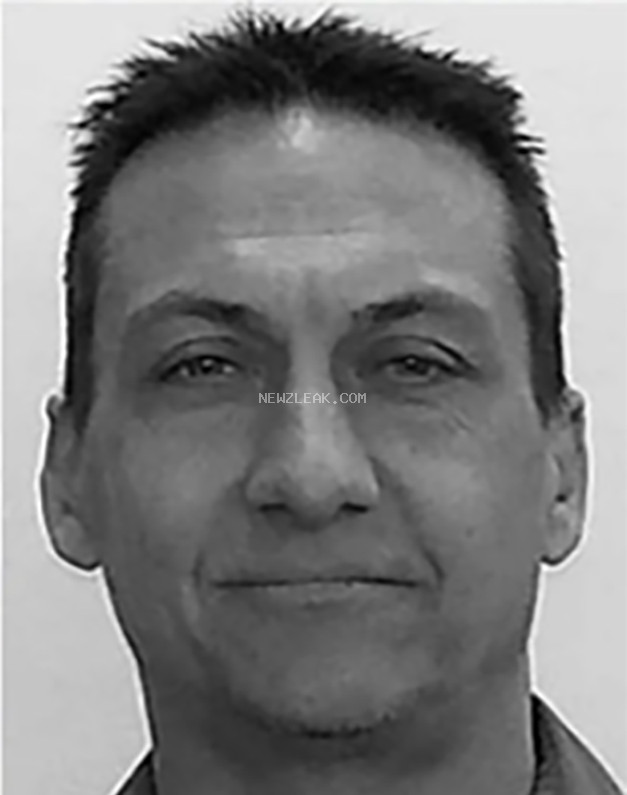
The death of alleged fugitive and self-proclaimed “sovereign citizen” Dezi Freeman was supposed to bring closure.
Instead, it has opened the door to a new wave of unanswered questions.
After a 216-day manhunt, one of the largest in Australian history, police located Freeman at a remote property on the Victoria–New South Wales border. What followed, according to official accounts, was a prolonged stand-off. Negotiations were attempted. Officers called for surrender. And then, in the final moments, Freeman allegedly emerged from a shipping container wrapped in a blanket, revealed a firearm, and was shot dead by Special Operations Group officers.
More than twenty rounds were fired.
That detail alone raises a question few in authority seem willing to address. Was this a tactical response to an immediate threat, or something far more final in its intent. Twenty shots does not suggest restraint. It suggests overwhelming force, the kind that leaves no room for survival, and no opportunity for answers.
Because with Freeman now dead, the only person who could fully explain what happened on that day six months ago is gone.
Police allege Freeman ambushed officers serving a warrant at his Porepunkah property, killing two and seriously injuring a third before fleeing into bushland.
Yet despite the severity of that claim, the public has not been shown unredacted body camera footage from that original encounter. There has been no transparent reconstruction of the events that led to two officers losing their lives and a suspect vanishing into the wilderness armed with police weapons.
And that absence matters.
It matters because the narrative we are being asked to accept is built almost entirely on controlled statements, press conferences, and carefully released fragments of information.
Now, even the final confrontation raises more concerns than it resolves.
Police say Freeman was identified during the operation, yet at the same time officials have stated they were awaiting formal identification of the body.
That contradiction is not minor. It cuts to the core of the operation itself.
If identity was uncertain after the shooting, how certain were officers before they pulled the trigger. And if identity was confirmed beforehand, why the delay in confirming it afterwards.
Equally troubling is the condition of the body itself. A man shot more than twenty times is unlikely to be easily identifiable. That alone raises the uncomfortable possibility that the level of force used ensured not just a fatal outcome, but a final one in every sense.
No trial.
No testimony.
No cross-examination.
Just silence.
Authorities have stressed that Freeman had the opportunity to surrender and chose not to. They have described him as dangerous, radicalised, and armed.
That may well be true.
But in a country that prides itself on due process, the standard cannot simply be whether someone is dangerous. It must also be whether the response leaves room for accountability.
Because the public is now left with two critical events, both shrouded in unanswered questions.
The first, a deadly police ambush with no full public evidence.
The second, a final confrontation that ended in a hail of bullets and a dead suspect.
Between those two moments lies a six-month manhunt involving hundreds of officers, thousands of leads, and a story that has never been fully laid bare.
Now, the central figure is gone.
And with him, the possibility of ever hearing his version of events.
An investigation into the shooting is underway, as is the expected coronial process into the earlier deaths.
But for many, that will not be enough.
Because what the public has been given so far is not clarity.
It is a narrative.
And until the evidence behind that narrative is fully revealed, one question will continue to linger long after the shooting has faded from headlines.
Was this justice being carried out, or a story being closed