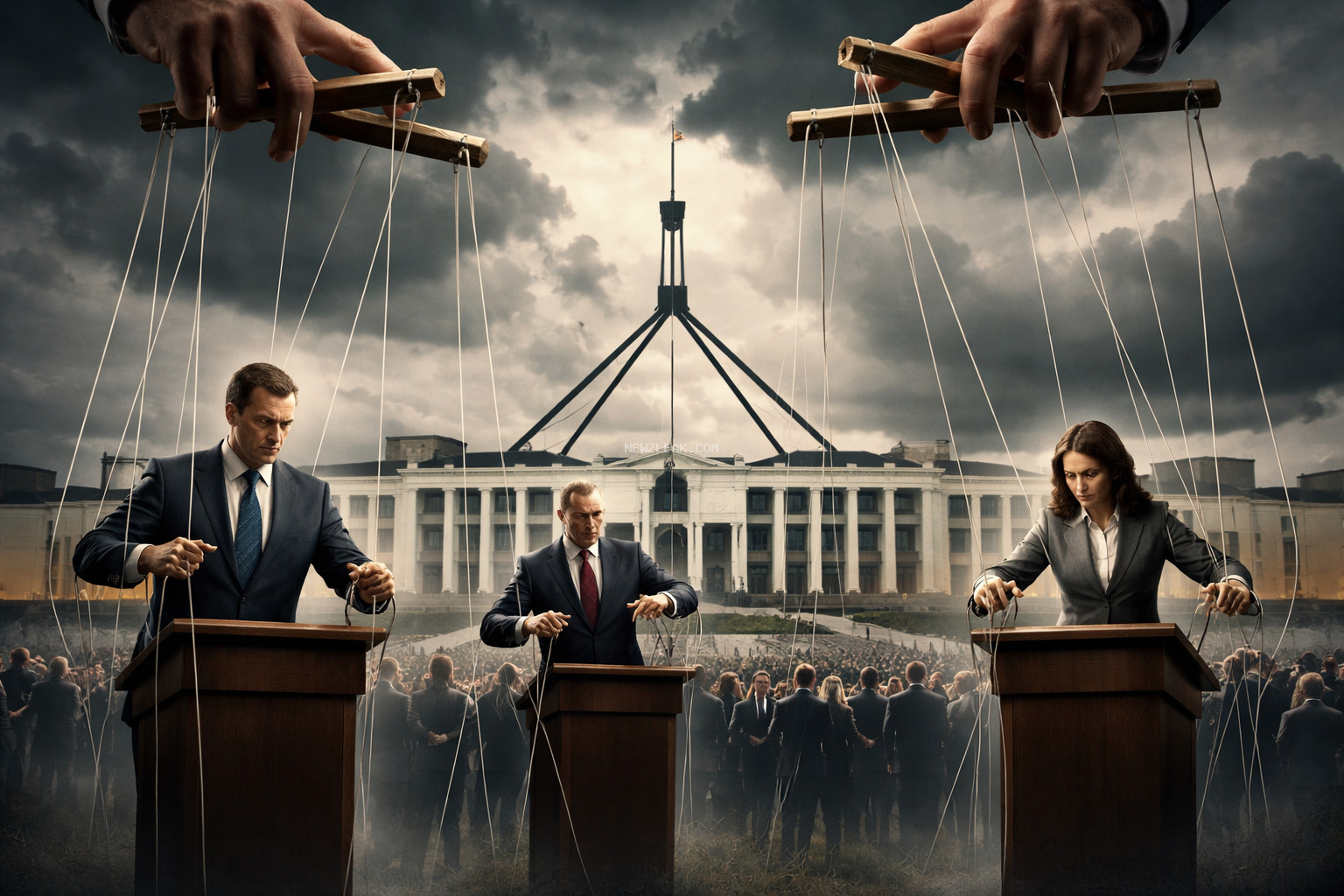
A political shift is quietly gathering momentum across Australia—and this time, the major parties are paying close attention.
Support for One Nation is on the rise again, and while it may not yet be dominant, its growing base is sending a clear message: a significant portion of Australians are losing faith in the traditional two-party system.
For decades, power has largely alternated between the Australian Labor Party and the Liberal Party of Australia—a structure often referred to as the “two-party preferred system.” But increasingly, voters are questioning whether that system still serves them.
More and more Australians are beginning to see the major parties not as opponents, but as two wings of the same bird—different in branding, perhaps, but ultimately operating within the same constraints, influenced by the same forces, and delivering many of the same outcomes.
And that’s where the frustration is boiling over.
Behind the public theatre of politics lies a deeper reality—one shaped by lobbyists, long-term bureaucrats, industry leaders, and institutional powerbrokers. In Canberra, and across every state, these figures don’t change with elections. Governments come and go, but the machinery behind them remains.
It’s here that many believe the real decisions are made.
When newly elected governments take office, they are often briefed—some would say “brought into line”—by established figures: police commissioners, intelligence chiefs, senior public servants, and powerful industry stakeholders. These are the people with institutional knowledge, operational control, and, crucially, influence.
It’s also where campaign promises frequently begin to unravel.
Australians have seen it time and time again: bold election commitments softened, delayed, or quietly abandoned once a party takes power. The explanation is often complex—economic realities, national security concerns, global pressures—but the pattern is unmistakable.
And voters are starting to connect the dots.
There is a growing belief that who you vote for is not always who governs.
This is the environment in which One Nation is finding renewed traction. For many supporters, the party represents not just an alternative—but a potential disruption to a system they feel is no longer accountable to the public.
The question now being asked across the country is simple, but confronting:
Is this a genuine opportunity for change—or just another cycle?
Can One Nation, if given real power, resist the influence of entrenched interests and chart its own course based on the needs of everyday Australians? Or will it, like those before it, eventually bend under the weight of the same pressures that have shaped governments for generations?
Critics argue that no party is immune. That once inside the system, the system reshapes them.
Supporters argue that change has to start somewhere.
But increasingly, a third view is emerging—one that goes beyond party lines altogether.
Some are now questioning whether the issue isn’t who is elected, but how the entire system operates.
If power consistently resides behind the scenes, if policy is shaped by unelected forces, and if elected officials are constrained the moment they take office—then swapping out political parties may be little more than a surface-level fix.
For these Australians, the conversation is shifting from political change… to structural reform.
And that’s where things get serious.
Because once the public begins to lose faith not just in politicians, but in the system itself, the consequences can be profound.
What happens next will depend on how both major parties respond. Dismiss this as fringe sentiment, and they risk accelerating the very movement they fear. Engage with it, reform, and rebuild trust—and they may yet steady the ship.
But one thing is clear:
The rise of One Nation is not happening in a vacuum. It is a symptom of something deeper—something many Australians are only just beginning to fully recognise.
And whether it leads to meaningful change… or simply another reshuffling of the deck… may define the next chapter of Australian democracy.