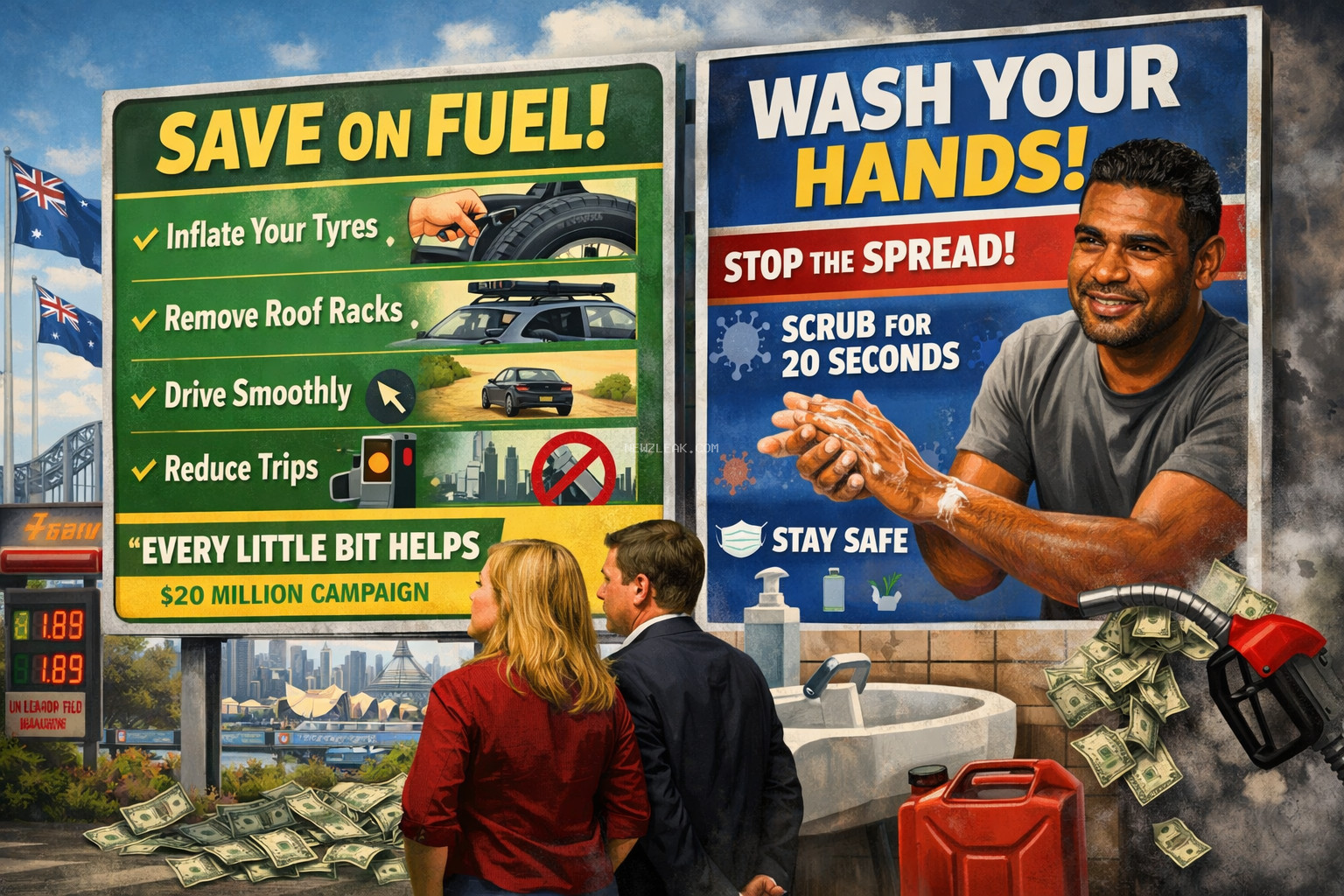
The Australian government’s latest attempt to tackle the fuel crisis — a $20 million advertising campaign urging Australians to drive more efficiently — has sparked widespread backlash, ridicule, and a growing sense of déjà vu.
The campaign encourages motorists to inflate tyres, remove roof racks, and adjust driving habits to reduce fuel consumption. On paper, it’s practical advice. In reality, many Australians are asking a simple question: is this really the best a government can do in the middle of a national fuel crisis?
Critics say the answer is no — and they’ve seen it all before.
From Fuel Tips to Handwashing Lessons
For many, the campaign echoes the tone and strategy used during the COVID-19 era, when governments spent heavily on advertising to promote basic behavioural advice.
Australians were inundated with messaging reminding them how to wash their hands, how to sneeze, and how to interact with one another — often delivered through polished campaigns featuring athletes and public figures like Jade North.
The intent, according to officials at the time, was to provide clear, consistent guidance during a crisis. But critics argue the approach blurred the line between public health messaging and taxpayer-funded overreach — effectively telling adults how to perform everyday tasks.
Now, with the fuel crisis biting hard, many believe the same strategy is being deployed again.
Advice or Avoidance?
The core frustration isn’t the advice itself — few would argue against maintaining tyre pressure or reducing drag.
It’s the perception that behavioural messaging is being used as a substitute for meaningful policy action.
Australians are dealing with soaring fuel prices driven by global instability, supply chain pressures, and long-standing structural issues. Against that backdrop, a $20 million campaign focused on minor efficiency gains feels, to many, like a distraction.
As one critic put it: “People don’t need to be told to save fuel — they’re already doing everything they can afford to.”
Optics Over Outcomes?
The government maintains the campaign is about reducing demand and helping Australians navigate a challenging period. Even small reductions, officials argue, can have a cumulative impact.
But the lack of clear modelling on the campaign’s effectiveness has only fuelled scepticism.
That raises a deeper concern — not just about this campaign, but about a broader governing pattern.
Increasingly, critics argue governments are leaning on communication strategies that create the appearance of action, while avoiding the harder task of addressing systemic problems.
The Bigger Question
The comparison between COVID-era messaging and today’s fuel campaign is not lost on the public.
In both cases, large sums have been spent telling Australians how to adjust their behaviour — rather than directly addressing the underlying drivers of the crisis.
That leaves a lingering question:
Are governments responding to crises — or managing public perception of them?
And as pressure mounts on household budgets, that question is no longer rhetorical.