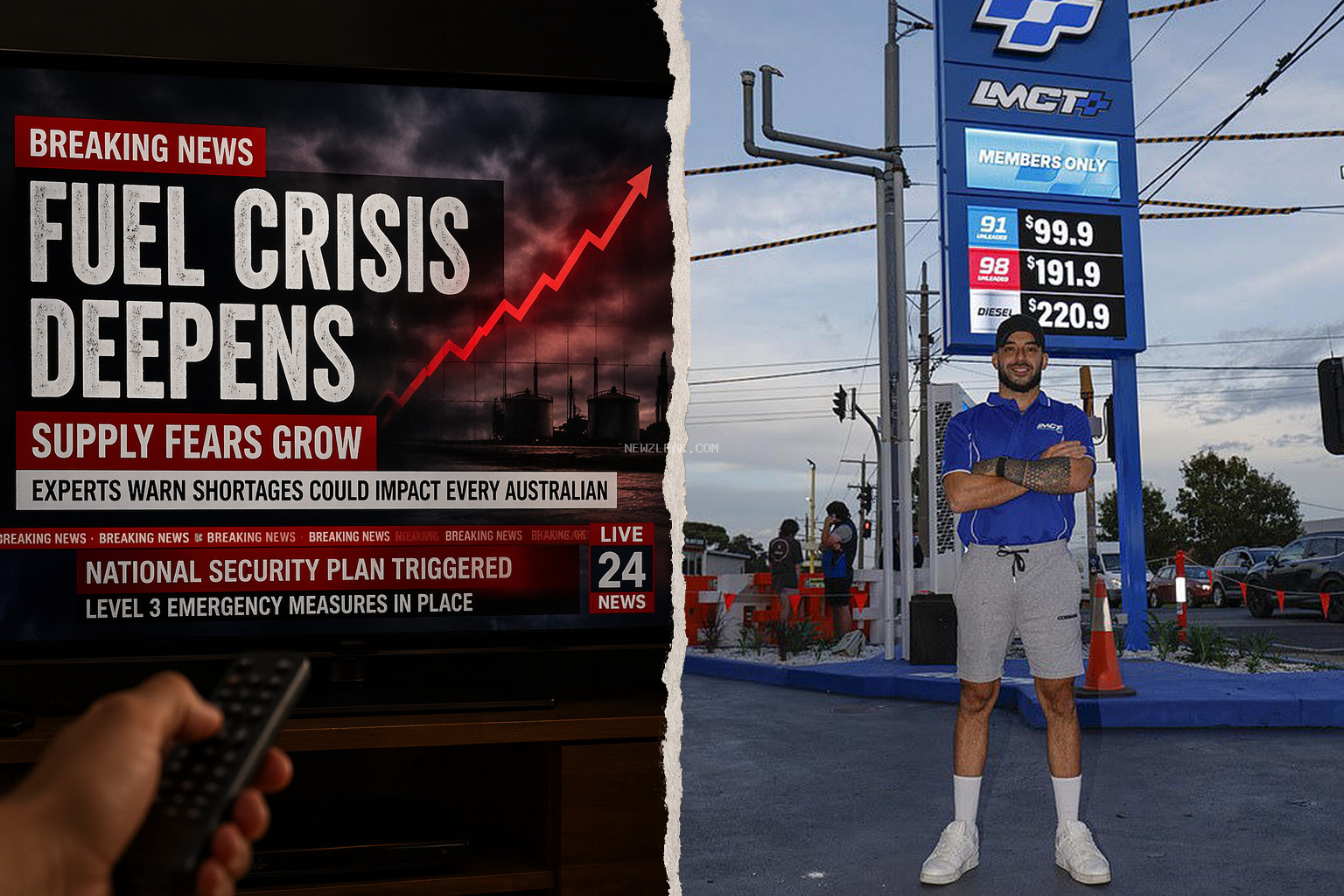
Oil prices are falling. Fuel costs at the wholesale level are easing. Tensions in the Middle East, while far from resolved, have cooled enough for markets to respond.
That should mean relief.
Instead, Australians are being fed a steady stream of warnings about fuel shortages, emergency response levels, and supply insecurity. Headlines continue to lean heavily toward crisis, even as the numbers begin to move in the opposite direction.
It is a contradiction that is becoming harder to ignore.
In global markets, crude oil prices respond quickly to perceived risk. When conflict escalates, prices spike. When tensions ease, prices fall. That pattern has played out consistently over decades, and it is playing out again now.
At the same time, Australia’s fuel position has not deteriorated in line with the tone of recent reporting. Strategic reserves have been strengthened in recent months, and supply chains have stabilised compared to earlier disruptions.
Yet the messaging remains unchanged.
So what explains the gap between the data and the narrative?
Modern media operates in a highly competitive environment where attention is currency. Fear-based reporting consistently outperforms neutral or positive updates. A warning of shortage will always generate more engagement than a quiet acknowledgment that conditions are improving.
But there is another layer worth examining.
Alongside persistent warnings about fuel security, there has been a noticeable increase in coverage promoting electric vehicles. Stories emphasising lower running costs and lifestyle convenience are being published at a steady rate, often presenting an idealised version of ownership that does not reflect the reality for many Australians.
Long-distance travel in Australia is not comparable to urban commuting. Distances are vast. Charging infrastructure remains inconsistent outside major population centres. For many drivers, the idea of adding extended charging stops to an already long journey is not appealing.
This disconnect between messaging and lived experience is being noticed.
Public reaction, particularly online, suggests a growing scepticism toward how these topics are being framed. When people feel that important context is being left out, trust begins to erode.
That raises a broader question about influence and alignment.
Global organisations such as the World Economic Forum bring together political leaders, corporate executives, and policymakers to discuss long-term economic and technological trends. These forums are not secret. Their goals are publicly stated and widely documented.
What is less clear to the average person is how ideas discussed in these settings translate into real-world policy, media narratives, and consumer messaging.
When similar themes begin appearing across multiple sectors at the same time — energy transition, digital services, shifting ownership models — it is not unreasonable for people to question whether these developments are occurring independently or as part of a broader directional push.
That question does not require a conspiracy to exist. It requires only observation.
Industries are clearly moving toward models that favour ongoing payment over outright ownership. This is visible in software, entertainment, transport, and even aspects of energy consumption. Whether this shift is driven by market forces, policy influence, or a combination of both is open to debate.
What is not open to debate is that the shift is happening.
The concern for many Australians is not change itself. It is transparency.
When fuel prices fall but the headlines remain negative, people notice. When new technologies are promoted without addressing their limitations, people question it. When narratives feel one-sided, people push back.
And right now, more people are starting to do exactly that.