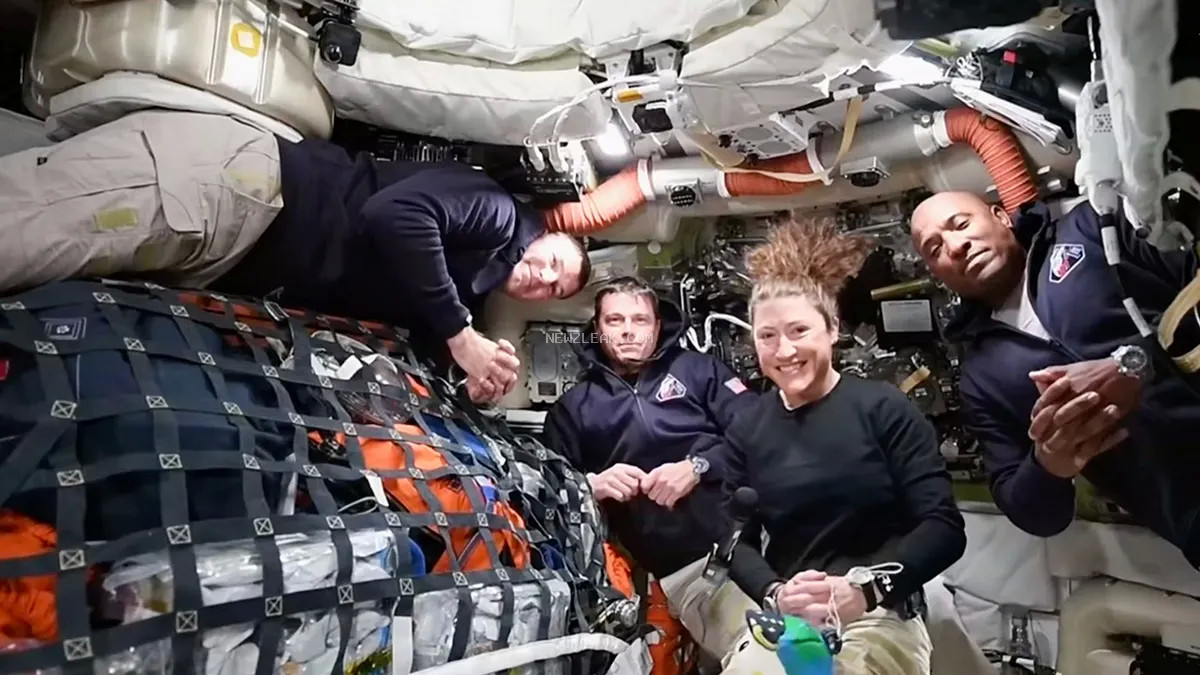
On April 1, the world once again turned its eyes to the sky as NASA launched its long-awaited Artemis II mission, sending humans back toward the Moon for the first time in more than half a century.
It should have been a moment of pure celebration.
For many, it still is.
But for others, it has reignited a debate that never truly went away.
Did we really do this so easily the first time?
The Artemis II mission, expected to last around ten days, is a carefully orchestrated journey. It will carry astronauts around the Moon and back, testing systems, safety procedures, and the limits of modern engineering. Every movement is monitored, every system redundantly backed up, every risk analysed in extraordinary detail.
This is not a rushed mission. It is a cautious one.
And that is exactly what has some observers asking questions.
Because when you compare it to Apollo 11 in 1969, the contrast is hard to ignore.
That mission, conducted with computers less powerful than a modern calculator, took just eight days. Within that time, astronauts travelled to the Moon, performed a precise landing, spent over twenty hours on the lunar surface, then launched back into orbit and successfully docked with a command module before returning to Earth.
By comparison, Artemis II will not even attempt a landing.
Instead, it will orbit, observe, and return.
For many, that difference highlights progress. A more careful, more measured approach built on decades of learning.
But for others, it raises an uncomfortable thought.
How did we supposedly achieve so much more, so much faster, with so much less.
The question is not new.
For decades, a portion of the population has believed the original Moon landings were exaggerated, staged, or part of a broader psychological operation during the Cold War. At the height of tensions between the United States and the Soviet Union, the space race was more than exploration. It was a battle for global dominance, technological superiority, and ideological victory.
To some, the Moon landing was the ultimate show of power.
To others, it was something else entirely.
A narrative.
A carefully crafted demonstration of capability designed to win a war that was fought as much in perception as it was in reality.
Whether those beliefs hold weight or not, Artemis II has undeniably breathed new life into them.
Because this mission, despite modern technology, has not been without its issues.
Early in the flight, astronauts reported a malfunctioning toilet, hardly the image of flawless space travel often portrayed. There were also a series of warning alerts, including a frightening depressurisation signal that briefly raised concerns before being confirmed as a false alarm. These are not catastrophic failures, but they are reminders that space remains unpredictable, unforgiving, and complex.
Even with decades of advancement, nothing about this is easy.
And that is precisely what captures the imagination.
Because while sceptics question the past, the present is unfolding in real time for anyone to watch. NASA has embraced transparency in a way never before possible, streaming high-definition footage from orbit, sharing conversations with astronauts, and offering a window into a mission that feels both extraordinary and strangely human.
You see the Earth drifting silently below.
You hear the voices inside the capsule.
You witness the small problems, the adjustments, the reality of being in space.
It is inspiring.
It is confronting.
And for some, it is deeply thought provoking.
Because regardless of where you stand on the history of the Apollo missions, Artemis II is real, happening now, and far from simple.
It shows just how difficult it is to leave Earth, to survive beyond it, and to return safely.
And that, perhaps more than anything, is why the questions persist.
If this is what it looks like today, with all our advancements, all our computing power, and all our experience…
What exactly did it look like in 1969.
NASA insists Artemis II is only the beginning, a stepping stone toward returning humans to the lunar surface and eventually pushing on to Mars.
For a new generation, it is a chance to dream again.
For others, it is a reason to look back.
And somewhere between those two perspectives lies the enduring mystery of humanity’s relationship with the Moon.
Not just how we reach it.
But how we remember getting there.