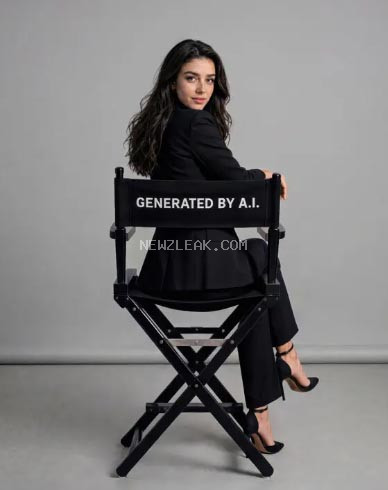
Hollywood is having another collective meltdown.
This week, AI-generated actress Tilly Norwood was announced as the star of Misaligned, what is being billed as the first feature film led by an AI-generated performer. Predictably, social media exploded, actors voiced outrage, unions raised concerns, and the internet once again split neatly into two camps: "This is the end of art!" and "This is incredible."
If all of this sounds familiar, that's because we've been here before.
For years, technologists, economists and futurists have warned that artificial intelligence wouldn't just replace repetitive factory jobs. It would come for the "safe" jobs. The creative jobs. The white-collar jobs. The jobs that humans convinced themselves were somehow untouchable because they required imagination.
Apparently, nobody was listening.
The warnings were everywhere. AI would write articles. AI would compose music. AI would generate artwork. AI would edit video. AI would code software. AI would answer customer support. AI would design products. AI would eventually perform on screen.
People laughed.
"Computers can't be creative," they said.
Then computers became creative.
Now, one of Hollywood's newest "stars" doesn't even exist.
Whether Tilly Norwood becomes the next box-office sensation or quietly fades into digital obscurity almost misses the point. The point is that the line has been crossed. AI has stepped onto the movie set, and history suggests it rarely steps backwards.
Of course, none of this means human actors disappear tomorrow. Horse-drawn carriages didn't vanish the day the first automobile rolled off the production line either.
But the direction of travel?
That seems painfully obvious.
Studios see lower costs. Producers see shorter production schedules. Investors see larger profit margins. Audiences... well... audiences have shown time and again they'll happily consume whatever entertains them.
If history has taught us anything, convenience almost always beats nostalgia.
There's something wonderfully ironic about all this.
For decades we've watched The Terminator, nodded wisely whenever someone warned about Skynet, then walked out of the cinema and immediately built smarter computers.
It's almost as if humanity watched a two-hour instruction manual and thought, "Great idea. Let's give it a crack."
We're a remarkable species.
We can recognise a cautionary tale...
...and somehow mistake it for a business plan.
The outrage we're seeing today isn't really about one AI actress. It's about something much bigger.
It's about the uncomfortable realisation that the future everyone insisted was "decades away" has quietly wandered into the room while we were arguing about whether AI could draw hands properly.
The genie isn't going back into the bottle.
The toothpaste isn't going back into the tube.
And, as the old saying goes...
You can't unscramble the egg.
Will AI replace every actor?
Probably not.
Will it replace some jobs?
Almost certainly.
Will it reshape industries we once believed belonged exclusively to humans?
That train left the station a while ago.
The real question isn't whether AI is coming.
It arrived while we were distracted.
Perhaps it's finally time to stop pretending we can rewind the clock.
Maybe...
Just maybe...
It's time to sit back...
...and enjoy the show.