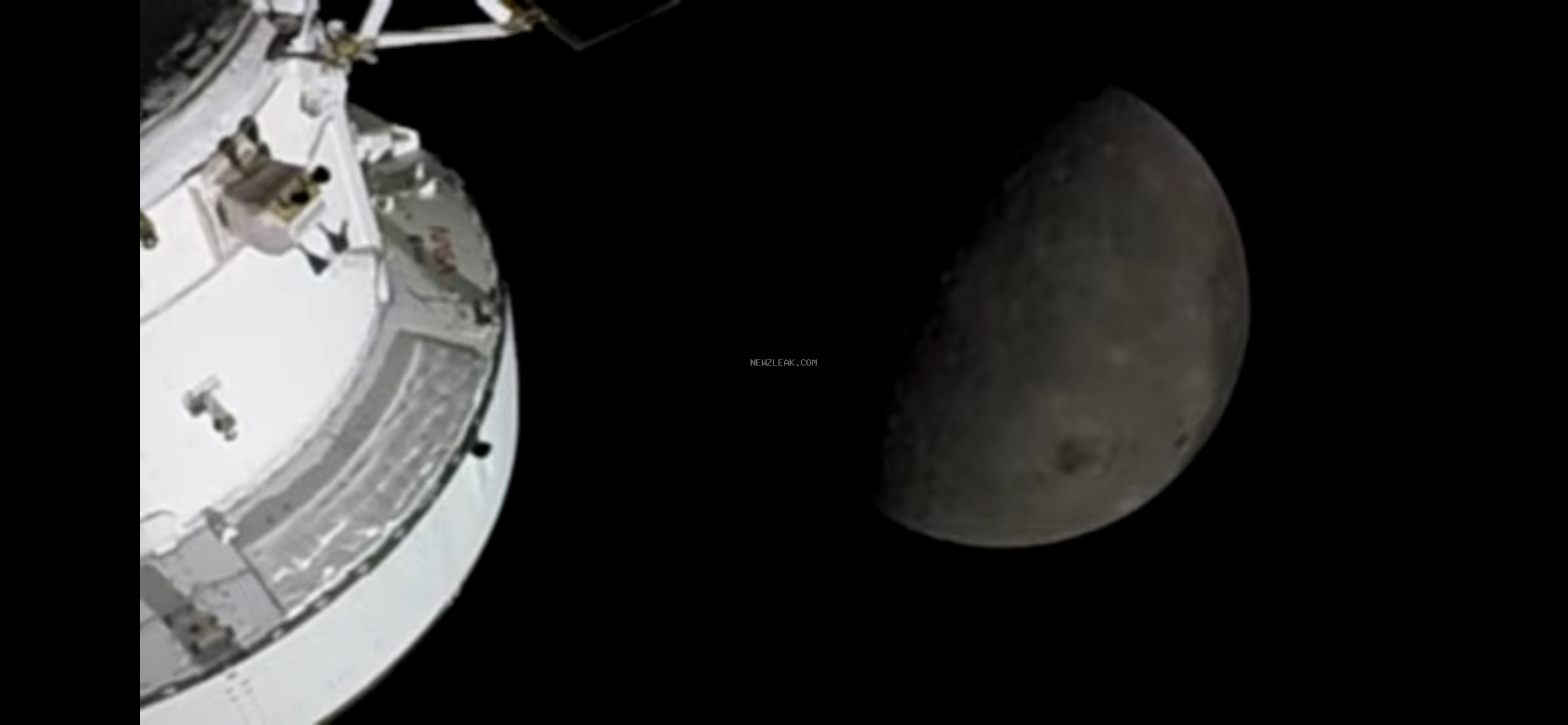
In what many are calling a bold and somewhat inconvenient development, NASA has reportedly been forced to send astronauts all the way to the Moon after failing to secure the services of legendary filmmaker Stanley Kubrick.
The result? Real footage. And plenty of it.
The Artemis II mission, currently looping around the Moon, is delivering breathtaking images back to Earth, with millions tuning in as humanity once again ventures beyond the comfortable confines of low Earth orbit. For the first time in over 50 years, humans are witnessing the lunar far side with their own eyes—no soundstage required.
Earlier this morning (Australian time), the crew quietly rewrote the history books, travelling further from Earth than any humans before them. The spacecraft reached a staggering distance of more than 400,000 kilometres—comfortably surpassing the record set during the Apollo 13 mission.
Whether that record is measured in hundreds of thousands of kilometres or dismissed by some as “just a few hundred above Earth,” it remains, by all reasonable definitions, a remarkable feat.
As the spacecraft now passes behind the Moon, the mission enters one of its most tense phases. For around 40 minutes, communications with Earth will be completely cut off as the Moon itself blocks all signals. No livestream, no updates—just four astronauts and the vast silence of space.
Back on Earth, mission control—and much of the world—will simply have to wait.
It’s a moment reminiscent of the Apollo era, when astronauts disappeared behind the lunar horizon and the planet collectively held its breath. Today, despite all our technology, that same uneasy silence remains.
The irony isn’t lost on observers. In an age of CGI, AI-generated imagery and increasingly convincing digital realities, one of humanity’s most ambitious space programs has had to fall back on the original method: actually going there.
And as the images continue to stream in—crisp, unfiltered and undeniably real—they are doing something no amount of special effects could quite achieve.
They are convincing people.
NASA’s Artemis program is designed to return humans to the Moon for the first time since 1972, with this mission serving as a crucial test flight ahead of future landings later this decade.
But for now, as the signal drops and the spacecraft disappears behind the Moon, the world watches… and waits.
Because no matter how advanced we become, there are still moments when humanity is reminded just how far away “far away” really is.