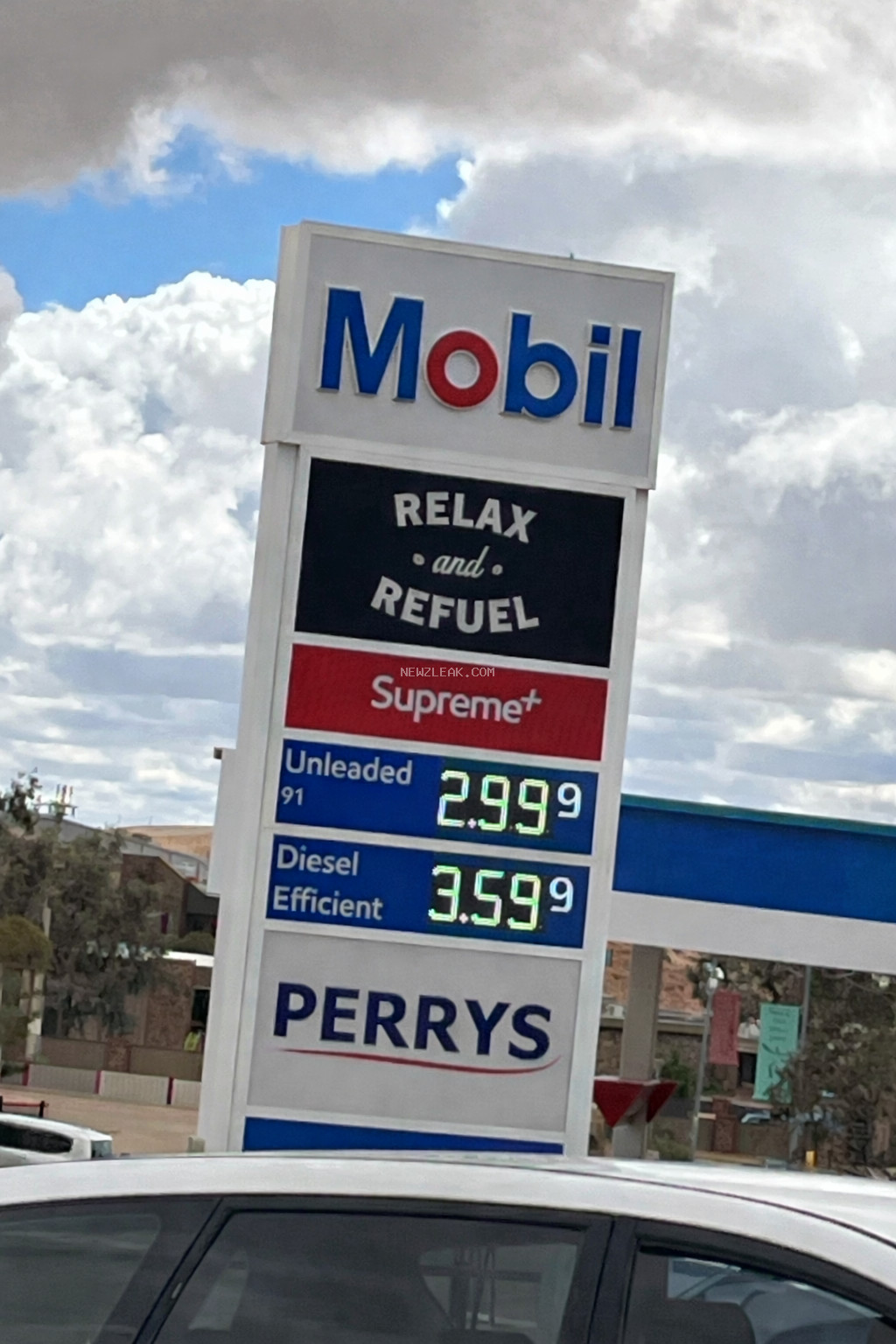
The Federal Government’s decision to halve the fuel excise was intended to provide immediate, tangible relief for Australians doing it tough at the bowser. From 1 April 2026, the excise on petrol and diesel was cut by 26.3 cents per litre for a three-month period, reducing it from 52.6 cpl to 20.6 cpl. In real terms, that should have translated to a saving of nearly $19 on a standard 65-litre tank.
But across South Australia — and increasingly the rest of the country — that relief has failed to materialise.
Instead of falling, fuel prices have continued their upward trend. In regional areas like Coober Pedy, motorists today were hit with another sharp increase, with prices jumping by around 10 cents per litre. The movement wasn’t isolated. Once again, prices shifted in near-perfect lockstep across multiple providers, reinforcing growing concerns that competition in the sector is little more than an illusion.
From the outset, there were warnings that fuel companies may not pass on the full benefit of the excise cut. Those concerns are now becoming reality. Rather than easing cost-of-living pressures, the measure appears to have been quietly absorbed into the system, with consumers seeing little — if any — of the promised savings.
Industry justification continues to point toward global instability, particularly tensions involving Iran and the Strait of Hormuz. But that explanation is beginning to unravel under scrutiny. Only around 20 percent of the world’s oil supply is directly impacted by disruptions in that region, and even then, Iran is reportedly allowing oil shipments from allied nations to continue moving through the strait.
So why are Australian motorists being asked to shoulder the cost as though supply has been critically compromised?
The question is being asked not just in remote towns, but across South Australia and beyond. If the government handed down a 26 cent reduction, why has it not been reflected at the pump? Where has that saving gone?
The Australian Competition and Consumer Commission has been given stronger oversight and clearer expectations when it comes to fuel pricing behaviour. Yet the patterns being observed — synchronised price hikes, limited downward movement, and a failure to reflect policy-driven reductions — suggest those powers are not being felt where they matter most.
For regional communities, where fuel is not optional but essential, the impact is magnified. Every increase flows through to groceries, transport, and basic living costs. The pressure is relentless, and patience is wearing thin.
Australians were told this measure would deliver relief. Instead, they are watching prices rise while that relief disappears somewhere between policy and pump.
There are serious questions that demand answers. And until those answers come, confidence in the system will continue to erode.