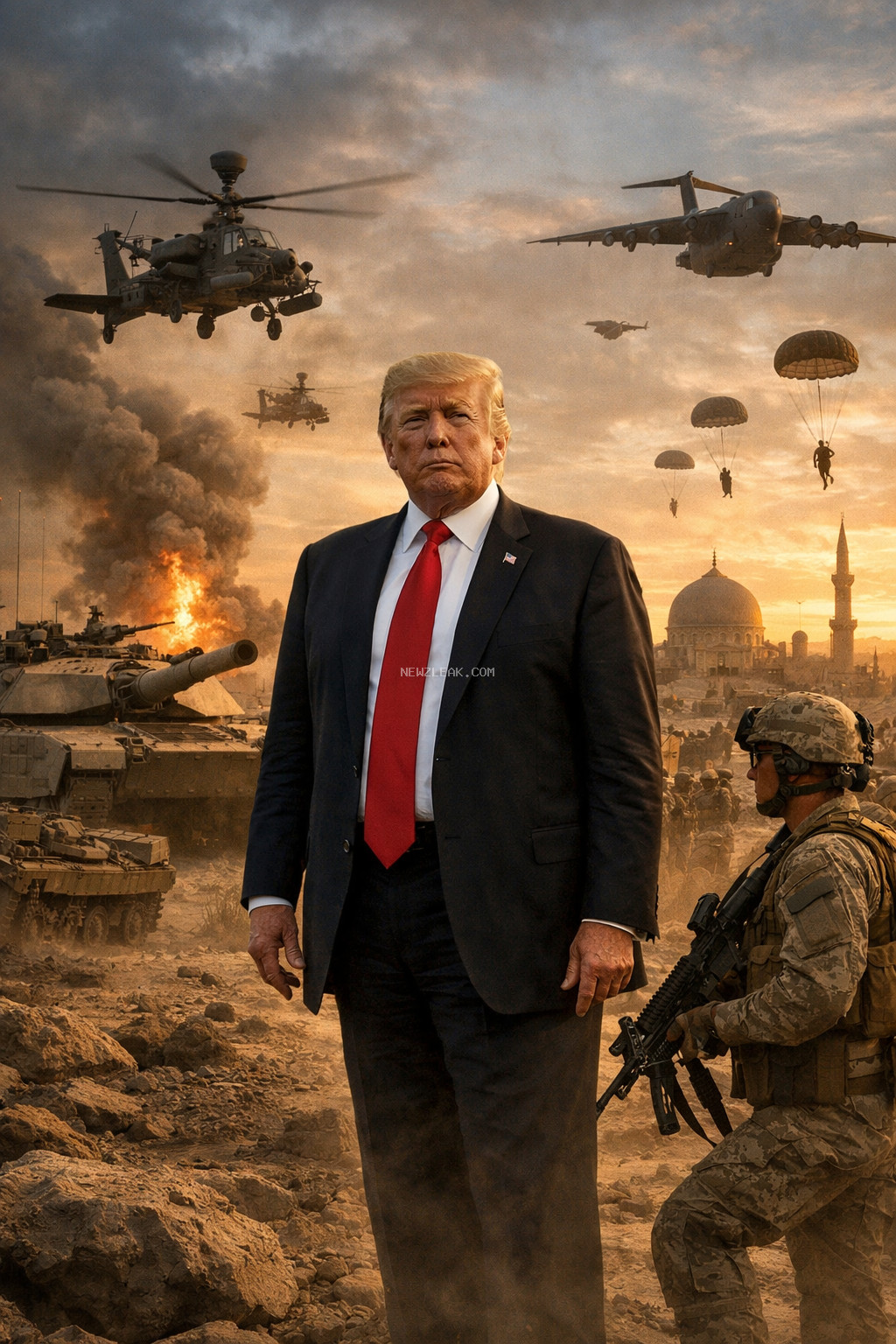
For the second time in as many weeks, Donald Trump has brought the world to the edge of a major Middle East conflict—only to step back at the final hour.
In an announcement today, Trump declared a ceasefire scenario involving Iran and the critical shipping lanes of the Strait of Hormuz, a move that has left global markets, analysts, and everyday consumers asking the same question:
What just happened—and what happens next?
A War Without a War
Over recent weeks, rhetoric from Washington escalated dramatically, with repeated threats to “annihilate” Iran. Markets reacted accordingly. Oil surged. Shipping routes were thrown into uncertainty. Insurance premiums spiked. Fuel prices followed across continents.
And now, just as quickly, the brakes have been slammed on.
Again.
This is now the second time the world has been dragged to the brink of a potentially catastrophic conflict, only for the situation to dissolve into ambiguity at the eleventh hour. The pattern is becoming difficult to ignore. Escalation is followed by global panic, economic shock, and then sudden de-escalation, leaving behind instability rather than resolution.
The Real Damage: Already Done
While headlines focus on “ceasefire,” the economic consequences are already embedded across global markets.
The mere threat of disruption to the Strait of Hormuz—through which roughly one-fifth of the world’s oil supply passes—was enough to trigger sharp increases in global oil prices. Those increases have flowed quickly into fuel costs, freight, logistics, and ultimately the price of goods worldwide.
A ceasefire announcement does not unwind those pressures overnight. Supply chains adjust slowly, and pricing tends to rise far faster than it falls. For businesses and consumers alike, the impact is already being felt.
So… Is the Strait Actually Open?
That remains unclear.
Today’s announcement signals de-escalation and hints at the reopening of shipping lanes, but provides little in the way of operational clarity. It is not yet certain whether vessels can move freely, whether military presence will remain, or whether insurers will consider the route safe enough to fully resume normal operations.
Until those questions are answered, caution will dominate global shipping decisions.
And in global trade, uncertainty carries a cost of its own.
Who Is Trump Talking To?
Perhaps the most uncomfortable question is also the most difficult to answer.
Recent intelligence assessments from both the United States and Israel have suggested that Iranian leadership structures may be significantly disrupted or fragmented.
Which raises a fundamental issue.
Who exactly is negotiating this ceasefire?
Who is in a position to agree to it, enforce it, or even represent a unified chain of command?
It is a question that has begun to surface more openly, sometimes with a tone of disbelief. If the structures of leadership are unclear, then the idea of a clean diplomatic resolution becomes harder to define.
At times, the situation borders on the surreal. Observers are left asking, only half in jest, whether the counterpart in these negotiations is clearly identifiable at all.
A Tired World Watches On
Beyond markets and military analysis, there is a broader sentiment emerging globally. Fatigue.
Fuel prices have surged. Supply chains have been strained. Economic uncertainty has intensified. Yet the geopolitical narrative feels increasingly erratic, driven as much by sudden shifts as by long-term strategy.
This is no longer just about military positioning.
It is about credibility, predictability, and trust.
And those are becoming harder to maintain.
What Happens Next?
If stability returns to the Strait of Hormuz and shipping resumes without disruption, markets may begin to settle. Prices could ease, though likely not at the same pace at which they rose.
If uncertainty persists, volatility will remain the dominant force.
Because in the current climate, it does not take a full-scale conflict to disrupt the global economy.
The threat alone is enough.